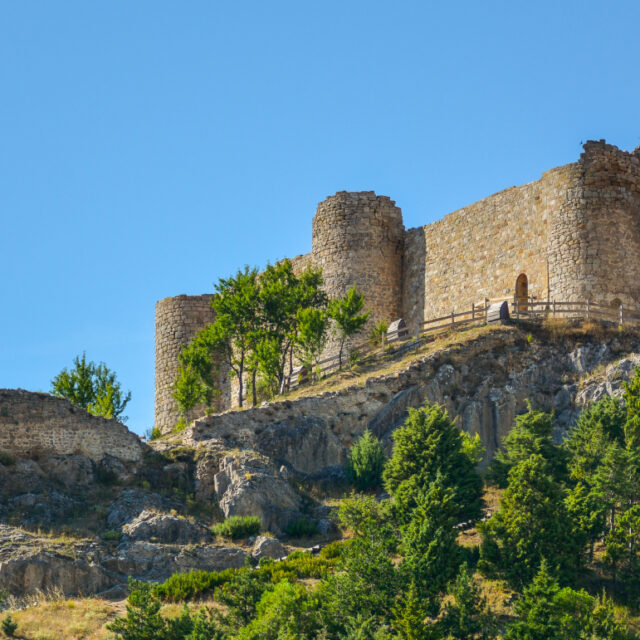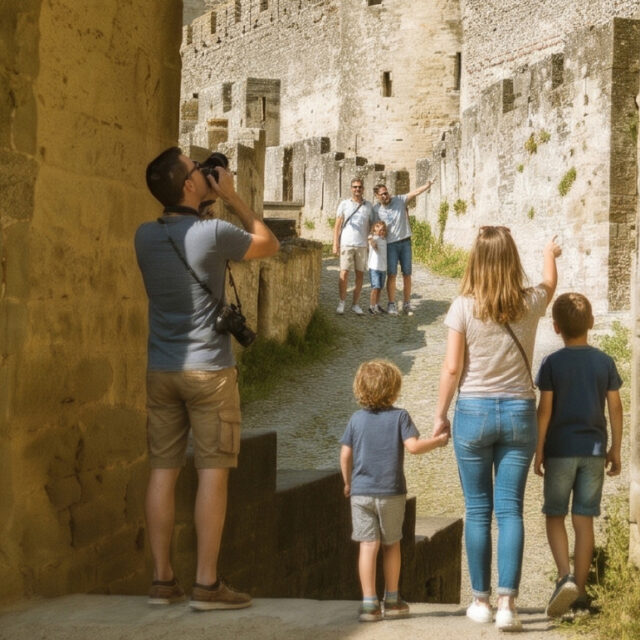
The Lauragais produces exactly what goes into a cassoulet, and not by accident: a plain for beans, a mountain for ducks, and a clay basin for the cassole. Here is where to find each, within 30 minutes of Le Clos Fleuri.
The Castelnaudary market
1.6 km · 3 minutes · town centre
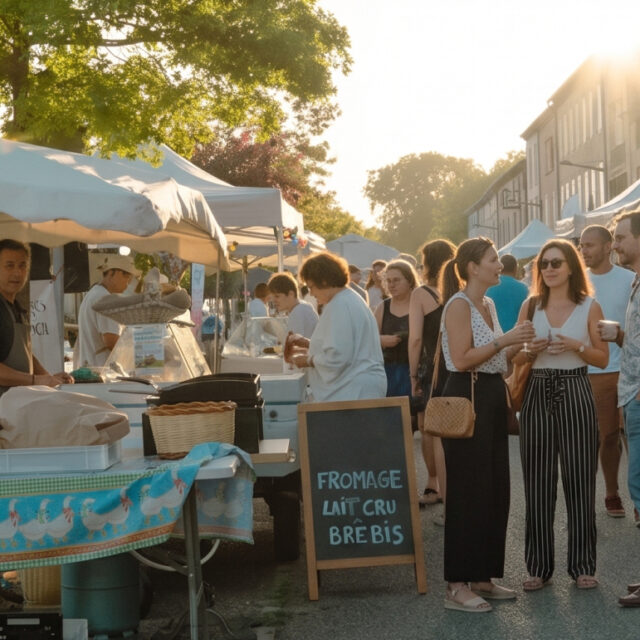
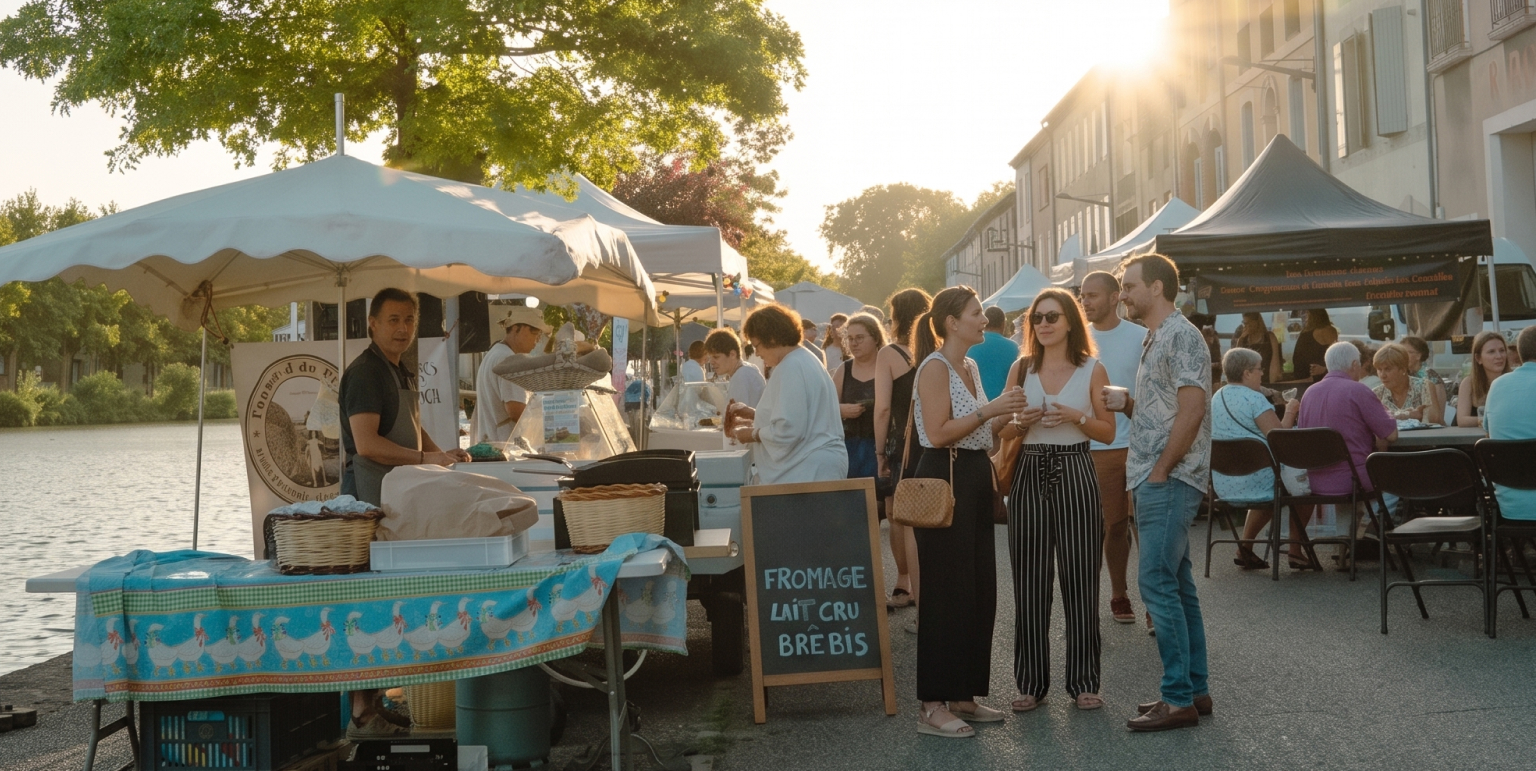
The gathering where the Lauragais puts itself on display: lingot beans, garlic, local honey, sheep’s and goat’s cheeses, artisan charcuterie, poultry, and seasonal fruit and vegetables.
The practical point: town-centre parking gets tight on market mornings. Walk in from the hotel — it is 20 minutes on foot, or 3 minutes by car if you park on the edge of the centre.
The market day and location are worth confirming at reception or with the Lauragais Audois Tourist Office.
The Lauragais lingot bean — the thing to take home
It is product number one, and it keeps.
The Lauragais is a cereal plain on deep clay-limestone soil, and the lingot finds exactly what it needs there: a fine skin, melting flesh, and the ability to withstand several hours of cooking without falling apart.
It is what makes a cassoulet. A cassoulet made with any old white bean is a dish of beans. With a Lauragais lingot, it is something else.
It keeps for months, it weighs nothing, and it goes in hand luggage. It is the best purchase of the trip.
The cassole — the thing nobody takes home
Issel: 9.8 km, 11 min · Mas-Saintes-Puelles: 9.2 km, 14 min
The conical earthenware dish that gave the dish its name. It has been made in these two villages for centuries, from local clay.
This is not folklore, it is engineering: – The porous clay regulates a slow, even cooking that neither cast iron nor steel reproduces. – The flared shape maximises the surface of the crust — the one that tradition says must be pushed down seven times during cooking.
You will not make a real cassoulet at home without bringing one back. It is the most useful and most durable souvenir of Castelnaudary, and almost nobody thinks of it.
Duck: confit, breast, foie gras
The Montagne Noire, from 25 minutes away
This is a country of livestock, forests and chestnuts. The confit, the duck breast, the foie gras and the charcuterie all come from there.
At the restaurant of Le Clos Fleuri, the duck on the menu comes precisely from a producer in the Montagne Noire, and the cassoulet is handmade.
The season: winter. The marchés au gras set up in the villages of the Lauragais and the Montagne Noire, and you buy foie gras, duck breasts, confits and charcuterie straight from the producer — at prices unrelated to supermarket Christmas shelves.
Lauragais saffron — the well-kept secret
Harvested in October and November
A small but very real production. The harvest is done by hand, flower by flower, over a few weeks in autumn.
What to know: during the flowering, a few producers open their doors. It is short, it is little known, and the prices bear no relation to supermarket ones.
It keeps for years and weighs a gram. It is the second-best purchase of the trip, after the lingot.
Honey, cheeses, walnuts, olive oil
Local honey: available all year at the market and from producers.
Regional cheeses: sheep and goat, at their best in spring.
Walnuts: autumn. From the Montagne Noire and the valleys.
Olive oil: production in the Aude is modest, but it exists.
Chestnuts: the Montagne Noire, in autumn.
Black truffle
December to February
It is traded on a few specialist markets in the area. It is seasonal, it is expensive, and it is for those who know what they are buying — but a truffle market is worth the trip for the atmosphere alone.
The wines
Malepère: 25 to 35 min · Cabardès: 30 to 40 min
The two closest appellations, and they tell you something.
Castelnaudary sits on a climatic frontier. The Naurouze watershed, 17 minutes away, marks the tipping point between Atlantic and Mediterranean influence. As a result, Malepère (AOC since 2007), on the Atlantic side, produces reds dominated by merlot — supple, easy-drinking, the obvious match for cassoulet. And Cabardès is the only AOC in France allowed to blend Atlantic and Mediterranean grape varieties, because it sits right on the seam.
Where to taste:
Estate | Village | Appellation | Time |
Les Vignobles de Vendéole | Arzens | Malepère | ~25 min |
Domaine Gayda | Brugairolles | Malepère / IGP | ~30 min |
Les Vignerons de la Voie Romaine | Pezens | Cabardès | ~30 min |
Cave des Oliviers | Montolieu | Cabardès / Malepère | ~34 min |
Château de Gaure | Gaja-et-Villedieu | Malepère | ~35 min |
Domaine de Cabrol | Aragon | Cabardès | ~40 min |
Let them know you are coming — these are small operations. Nominate a driver. See The vineyards around Castelnaudary.
The calendar
Season | What you will find |
Spring | plant markets, asparagus, first vegetables, spring cheeses |
Summer | evening producers’ markets, Sunday car-boot sales, the cassoulet festival |
Autumn | the best season — the harvest, wine fairs, walnuts, chestnuts, saffron |
Winter | marchés au gras (foie gras, duck breasts, confits), black truffle, and the real cassoulet season |
The dates of fairs, marchés au gras and festivals change every year. Check with the Tourist Office for the programme during your week.
Planning a food-focused day
Morning — the market (3 min). Buy the lingots, the honey, the cheeses, the charcuterie. 11 am — Issel or Mas-Saintes-Puelles (11 or 14 min). The cassole. 12.30 pm — Cassoulet, two hours. At the restaurant of Le Clos Fleuri: Lauragais lingot beans, duck confit, cooked in a cassole, with duck from a Montagne Noire producer. A red from Cabardès or Malepère. 4 pm — A tasting in Malepère (25 min) or Cabardès (34 min). 7 pm — The Grand Bassin (3 min), 2.5 flat kilometres. You will need them.
The practical rules
- A cool box is essential. A car in the sun reaches 60°C. Your cheeses, charcuterie and bottles will not survive the morning.
- Leave nothing in the boot. Neither fresh food nor wine. Ask at reception about storing things.
- Buy in the morning. Producers sell what they have, and the best goes early.
- Prioritise what keeps: lingots, saffron, honey, confits, a cassole, wine. Cheese and charcuterie are for the picnic.
- Ask. The producer knows what is good this week. That is the whole difference from a supermarket shelf.